Euripides, one of the three great tragedians of classical Athens alongside Aeschylus and Sophocles, died around 406 BC while living at the court of King Archelaus of Macedon. Ancient biographers, not always reliable, claimed he was killed by the king's hounds. His plays, including Medea, The Trojan Women, and The Bacchae, questioned the gods, elevated women's and slaves' voices, and influenced Western drama for millennia.

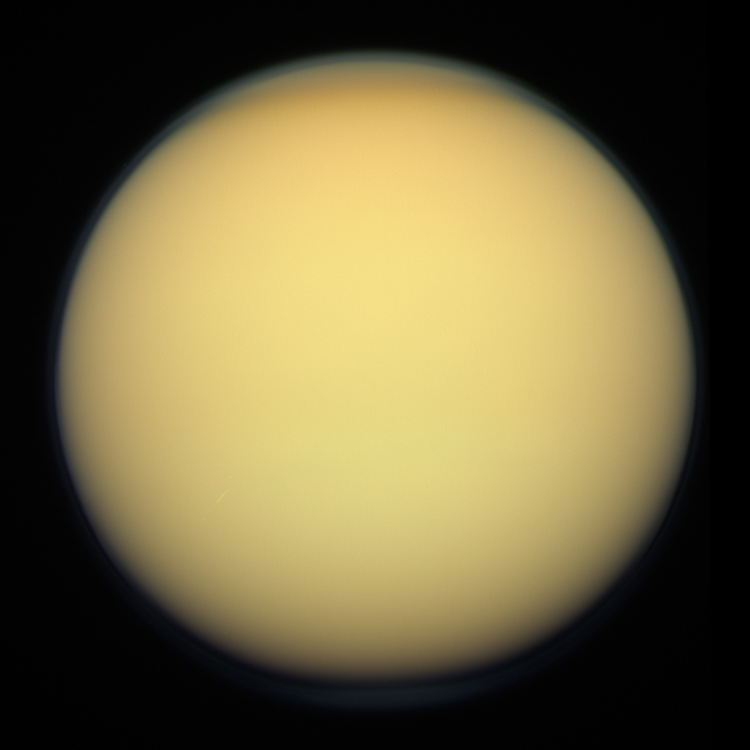
On March 25, 1655, Christiaan Huygens observed a point of light orbiting Saturn and correctly identified it as a moon, later named Titan. His discovery, made with telescopes he ground and designed himself, was the first moon found orbiting Saturn and helped confirm that other planets, like Earth, could have satellites, bolstering the Copernican model of the solar system.
French mathematician Urbain Le Verrier had calculated the position of an unseen planet based on irregularities in Uranus's orbit. He sent his predictions to Berlin Observatory astronomer Johann Galle, who, with student Heinrich d'Arrest, pointed a telescope at the predicted coordinates and found Neptune within about one degree of where Le Verrier said it would be. It marked the triumph of Newtonian mechanics and mathematical prediction over pure observation.

On September 23, 1945, French forces, aided by recently freed and rearmed colonial troops, seized key buildings in Saigon from the Viet Minh-aligned Committee of the South, effectively reasserting French control over southern Vietnam barely three weeks after Ho Chi Minh had declared independence in Hanoi. The action, backed by British occupation forces who had accepted the Japanese surrender in the south, triggered widespread strikes and guerrilla resistance and is often marked as the opening clash of the First Indochina War.

On September 23, 1958, the newly created National Aeronautics and Space Administration assumed control of the Jet Propulsion Laboratory in Pasadena, California, transferring it from Army jurisdiction. JPL, born from rocket experiments in the 1930s and 1940s, became NASA's center for robotic exploration, eventually building and operating missions to every planet in the solar system.

On September 23, 1965, India and Pakistan accepted a United Nations Security Council ceasefire resolution, halting a war that had erupted after Pakistani infiltration into Indian-administered Kashmir escalated into tank battles and air combat across the western front. Neither side gained significant territory, and the war's inconclusive end left the Kashmir dispute unresolved, setting the stage for further conflict in 1971.
