After a decade of construction that claimed over 5,600 lives and cost $375 million, the Panama Canal formally opened as the SS Ancon crossed from the Atlantic to the Pacific. The engineering feat, involving massive locks and the excavation of the Culebra Cut through the continental divide, cut the sea voyage between New York and San Francisco by roughly 8,000 miles.

After four days of secret meetings aboard warships anchored off Newfoundland, President Roosevelt and Prime Minister Churchill issued the Atlantic Charter, an eight-point statement outlining a vision for the postwar world: no territorial aggrandizement, self-determination for nations, freedom of the seas, and disarmament of aggressor states. Though the United States had not yet entered the war, the charter signaled deepening Anglo-American solidarity.

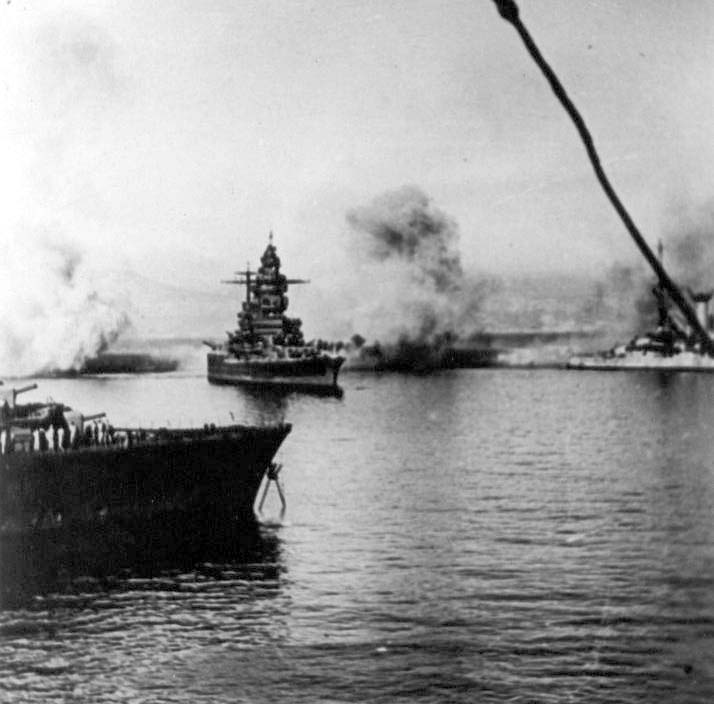
On the eve of the amphibious assault on the French Riviera, hundreds of Allied ships carrying American, French, and other Allied troops massed off Corsica and Sardinia. The operation, launched the following morning, aimed to seize the vital ports of Marseille and Toulon and to force German forces to retreat up the Rhône Valley, easing pressure on Allied armies fighting in Normandy.
Following the atomic bombings of Hiroshima and Nagasaki and the Soviet declaration of war, Emperor Hirohito recorded a surrender announcement broadcast to the Japanese nation. In Washington, President Harry Truman announced Japan's acceptance of the Allied surrender terms, prompting massive celebrations across the United States and Allied nations, an event that became known as V-J Day.

As the clock struck midnight, Pakistan emerged as a sovereign nation, one day ahead of India's own independence. Muhammad Ali Jinnah became the new nation's first Governor-General. The partition that created it triggered one of the largest and bloodiest mass migrations in human history, as Hindus, Muslims, and Sikhs crossed new borders amid communal violence.

On the third of four days at Max Yasgur's dairy farm, Woodstock continued despite overwhelmed infrastructure, torrential rain, and shortages of food and medical supplies. Janis Joplin performed a marathon set in the early hours, and the event, intended for 50,000 attendees, had swelled to an unmanageable and largely peaceful gathering of roughly 400,000 young people that came to symbolize the counterculture era.
A team led by Hal Weaver and Alan Stern announced that Hubble Space Telescope images taken in May had revealed two previously unknown moons circling Pluto, then still classified as the ninth planet. The moons, roughly 5,000 times fainter than Pluto itself, were provisionally designated S/2005 P1 and P2 before later being named Hydra and Nix.
